

Real vs Fake Pearls: How to Tell the Difference Before You Buy
Pearls are graceful, timeless, and meaningful — but before buying pearl jewelry, one important question comes first: are the pearls real or fake? Real pearls include natural and cultured pearls formed inside oysters or mussels, while fake pearls are imitation beads made to look like real pearls.
The difference matters because real pearls have nacre, natural luster, and lasting jewelry value, while fake pearls are usually made from glass, plastic, ceramic, shell, or coated beads. Whether you are shopping for pearl rings, pearl necklaces, earrings, or a romantic pearl engagement ring, knowing how to identify real pearls can help you buy with confidence.
Quick Answer: How Can You Tell if Pearls Are Real or Fake?
Real pearls usually feel slightly gritty, show natural surface variations, have deep layered luster, and feel cool at first touch. Fake pearls often feel overly smooth, look too uniform, may have a glassy shine, and can show coating damage near drill holes. For the best result, do not rely on one test only. Use texture, luster, shape, temperature, drill-hole inspection, and professional verification together.
What Are Real Pearls?
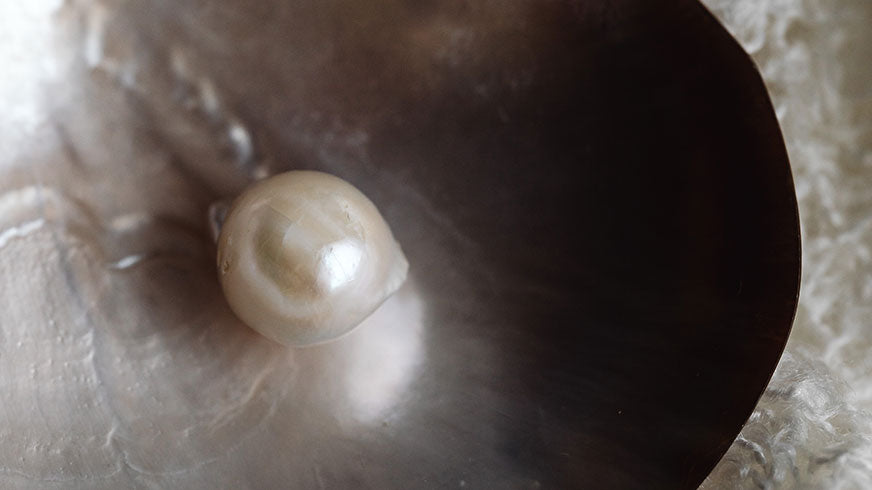
A real pearl is an organic gemstone formed inside a living mollusk, usually an oyster or mussel. When the mollusk coats an irritant with layers of nacre, a pearl begins to form. Nacre is the smooth, luminous material that gives pearls their soft glow.
There are two main types of real pearls:
- Natural pearls: These form without human assistance and are extremely rare today.
- Cultured pearls: These form inside mollusks with human help to begin the pearl-growing process. They are real pearls and are commonly used in modern fine jewelry.
Because natural pearls are rare, most real pearl jewelry available today uses cultured pearls. Cultured pearls are not fake. They are real pearls because they are created by mollusks and contain nacre.
What Are Fake, Faux, Simulated and Imitation Pearls?
Fake pearls are also called faux pearls, simulated pearls, artificial pearls, or imitation pearls. These pearls are not formed inside oysters or mussels. Instead, they are manufactured to look like real pearls.
Fake pearls may be made from materials such as glass, plastic, ceramic, shell, resin, or coated beads. Some imitation pearls can look beautiful for fashion jewelry, but they do not have the same nacre structure, natural formation, or value as real pearls.
Important buyer note: The words “faux,” “simulated,” “imitation,” and “artificial” usually mean the pearl is not real. The word “cultured” means the pearl is real, but grown with human assistance.
Real vs Fake Pearls: Quick Comparison Table
|
What Are Fake Pearls Made Of?
Fake pearls can be made from several materials. The most common include:
- Plastic: Lightweight and common in inexpensive costume jewelry.
- Glass: Heavier than plastic and sometimes more convincing at first glance.
- Ceramic: Smooth and durable, often coated to imitate pearl luster.
- Shell beads: Made from shell material and coated to resemble pearls.
- Resin or coated beads: Used to create a pearl-like surface shine.
Some high-quality imitation pearls can look attractive, but they are still not real pearls because they do not form naturally inside mollusks and do not have natural nacre layers.
8 Easy Ways to Tell Real Pearls from Fake Pearls
No single home test is perfect. Some imitation pearls are made very well, and some real cultured pearls can look highly uniform. The best approach is to use several checks together before making a final judgment.
Check the Texture
Look at the Shape
Compare the Luster
Feel the Temperature
Check the Weight
Inspect the Drill Holes
Look for Uniformity Across the Jewelry
Ask for Professional Inspection
Real pearls often have a slightly gritty or textured feel because of their nacre layers. Fake pearls usually feel very smooth or slippery because they are coated beads.
The traditional tooth test involves gently rubbing a pearl against the front edge of your teeth. A real pearl may feel slightly gritty, while a fake pearl often feels smooth. However, this test is not always practical or hygienic.
Hygiene tip: Avoid using the tooth test on store jewelry, shared jewelry, or unclean pearls. Instead, gently rub two pearls together or ask a jeweler to inspect the surface.

Real pearls often show small natural variations in shape. They may be round, near-round, oval, button, drop, baroque, or slightly irregular. Fake pearls, especially low-cost imitation strands, often look too perfectly round and identical.
However, shape alone is not enough. High-quality cultured pearls can also be beautifully round. The warning sign is not roundness by itself, but extreme uniformity combined with very low price, flat luster, and a smooth coated surface.
Real pearls usually have a deep, soft, layered glow. Their luster often includes subtle overtones such as cream, pink, silver, green, or golden shades depending on the pearl type.
Fake pearls may look overly shiny, flat, painted, glassy, or too white. If every pearl looks exactly the same under light, it may be imitation. Real pearls often show natural depth and slight differences in glow.
Real pearls usually feel cool when you first touch them. After a short time, they warm naturally against your skin. Plastic imitation pearls often feel closer to room temperature from the beginning.
This test is helpful but not final. Glass imitation pearls may also feel cool at first, so always combine the temperature test with texture, luster, and drill-hole inspection.
Real pearls often feel heavier than plastic imitation pearls. If a pearl strand feels extremely light, it may be made from plastic or lightweight artificial beads.
Still, weight is not a 100% reliable test. Glass, ceramic, or shell-based imitation pearls may feel heavy too. Use weight as one clue, not as the only proof.

Drill holes can reveal a lot about pearl authenticity. Real pearls usually have clean, neat drill holes. Fake pearls may show peeling, chipped coating, rough edges, or paint-like damage around the hole.
Use a magnifying glass if possible. If you notice a coating layer flaking away from the bead, the pearl is likely imitation.
No two real pearls are exactly identical. Even well-matched real pearl jewelry may show small differences in luster, color, surface, or shape. This natural individuality is part of their beauty.
Fake pearl necklaces or bracelets often have beads that look exactly the same in color, size, shape, and shine. Perfect uniformity does not always prove pearls are fake, but it can be a warning sign when combined with other clues.
If the pearl jewelry is expensive, antique, inherited, or being purchased as a meaningful gift, professional inspection is the safest option. A jeweler or gemological expert can check the pearl more accurately than home tests.
For fine jewelry purchases, look for clear product descriptions, trustworthy sellers, return policies, and quality information. You can also learn more from trusted pearl education sources such as the GIA pearl education guide.
Which Pearl Test Is Most Reliable?
The most useful home checks are texture, luster, drill-hole inspection, and surface variation. These tests help you understand whether the pearl has natural depth and nacre-like qualities or whether it looks like a coated bead.
However, no home test gives a guaranteed result. For high-value pearl jewelry, professional evaluation is always better. Jewelry descriptions should also be clear and accurate. For consumer protection and jewelry description standards, the FTC jewelry advertising guidance is a helpful reference.
Are Cultured Pearls Real or Fake?
Cultured pearls are real pearls. They are formed inside oysters or mussels and contain nacre, just like natural pearls. The difference is that a pearl farmer begins the process by placing a nucleus or tissue inside the mollusk.
This is different from imitation pearls, which are manufactured beads made to look like pearls. When shopping, remember this simple distinction:
- Natural pearl: Real pearl formed without human assistance.
- Cultured pearl: Real pearl formed with human assistance inside a mollusk.
- Imitation pearl: Fake pearl made from artificial or coated materials.
Are Real Pearls Worth Anything?
Yes, real pearls can have value, but the value depends on quality, type, size, luster, surface condition, shape, color, nacre quality, and matching. A high-quality cultured pearl can be valuable, while a damaged or low-quality pearl may be less valuable.
Natural pearls are usually much rarer than cultured pearls and can be highly valuable, especially in antique or collector jewelry. Cultured pearls are more common but can still be beautiful and meaningful depending on craftsmanship and quality.
If you want long-lasting pearl jewelry, choose trusted designs such as classic pearl jewelry, elegant pearl rings, or distinctive Tahitian pearl rings.
How to Tell if a Pearl Necklace Is Real
To check whether a pearl necklace is real, look at the pearls as a group. Real pearl necklaces usually show natural variation, deep luster, and clean drill holes. Many quality pearl necklaces are also knotted between pearls to protect them from rubbing and scattering if the strand breaks.
However, knots alone do not prove authenticity. Some fake pearl necklaces are also knotted. Use knots as a sign of better construction, not as final proof that the pearls are real.
If you are shopping for classic pearl styles, explore freshwater pearl necklaces and compare their quality, luster, and product details carefully.
Buyer Checklist Before Purchasing Pearl Jewelry
Before buying pearl jewelry online or in-store, use this simple checklist:
- Check whether the product says natural, cultured, freshwater, Akoya, Tahitian, South Sea, or imitation.
- Do not confuse cultured pearls with fake pearls. Cultured pearls are real.
- Look for clear photos showing luster, shape, setting, and drill areas if visible.
- Read the metal, pearl type, and gemstone details carefully.
- Check return policy, seller trust, and product description accuracy.
- Use more than one authenticity test before judging a pearl.
- For valuable or inherited pearls, ask for professional inspection.
Real Pearl Jewelry: What Should You Buy?
The right pearl jewelry depends on your style and purpose. If you want everyday elegance, freshwater pearl jewelry is a beautiful choice. If you love dark, dramatic tones, Tahitian pearls offer a bold and modern look. If you want romantic jewelry with meaning, pearl rings and pearl engagement rings can feel soft, timeless, and personal.
Pearls are especially loved for June birthstone gifts, wedding jewelry, anniversary gifts, and classic everyday styling. Their beauty comes from subtlety, so choose pieces that feel graceful, well-made, and easy to wear.
Looking for Real Pearl Jewelry You Can Trust?
Explore pearl rings, Tahitian pearl rings, and pearl engagement rings crafted for timeless elegance, meaningful gifting, and modern romance.
How to Care for Real Pearls
Real pearls need gentle care because they are organic gems. Avoid exposing them to perfume, hairspray, harsh cleaners, chlorine, and rough surfaces. Wipe pearls with a soft cloth after wearing and store them separately from harder gemstones or metals.
A simple pearl care rule is: put pearls on last and take them off first. This helps protect their luster from cosmetics, fragrances, and daily chemicals. For a detailed care guide, read our article on how to clean pearls without harming them.
FAQs About Real and Fake Pearls
What is the easiest way to tell if pearls are real?
The easiest clues are texture, luster, shape, temperature, and drill-hole quality. Real pearls often feel slightly gritty, show natural variation, and have deep layered luster. Fake pearls often feel smooth, look too uniform, and may show coating damage.
Are cultured pearls real or fake?
Cultured pearls are real pearls. They form inside oysters or mussels with human assistance. They are different from imitation pearls, which are manufactured beads made to look like pearls.
What are faux pearls?
Faux pearls are imitation pearls. They are made from materials such as glass, plastic, ceramic, shell, resin, or coated beads and are designed to look like real pearls.
What are fake pearls made of?
Fake pearls are commonly made from plastic, glass, ceramic, shell beads, resin, or coated materials. They do not form inside mollusks and do not have natural nacre layers like real pearls.
Do real pearls feel gritty?
Real pearls often feel slightly gritty because of their nacre layers. Fake pearls usually feel smoother or more slippery. However, texture should be checked along with other tests.
Can fake pearls look real?
Yes, some high-quality imitation pearls can look very similar to real pearls at first glance. That is why buyers should check texture, luster, drill holes, shape variation, and seller details before purchasing.
Are real pearls worth anything?
Real pearls can be valuable depending on type, size, luster, surface quality, shape, color, nacre quality, and condition. Natural pearls are usually rarer, while cultured pearls vary widely in value.
Should I use the tooth test on pearls?
The tooth test is a common method, but it is not always hygienic or suitable for store jewelry. Instead, you can gently rub two pearls together or ask a jeweler to inspect the pearl surface.
How can I tell if a pearl necklace is real?
Check whether the pearls have natural variation, deep luster, clean drill holes, and a slightly gritty surface. Knots between pearls can indicate better construction, but knots alone do not prove authenticity.